

 EN
EN

Rare NRG1 Fusions Detected in Lung Cancer: In the Absence of Domestically Approved Therapeutics, How Can Treatment Progress Be Achieved?
In the current era of precision oncology, drugs targeting common driver mutations such as EGFR and ALK have become clinically accessible, with multiple agents covered by national medical insurance. Nevertheless, the majority of patients still encounter the clinical scenario where no targeted therapeutic options are available. It is particularly distressing that even when a targetable mutation is clearly identified, the absence of domestically approved drugs for this alteration leaves patients trapped in the treatment dilemma of "having an identifiable target but no accessible drug". This paper presents a comprehensive analysis and discussion of the rarity, mutational characteristics, current drug development status, and available clinical treatment pathways for NRG1 fusion mutations.
PART 1
NRG1 Fusions: A "Super-Rare Target" in Solid Tumors
Neuregulin 1 (NRG1) is a ligand protein belonging to the epidermal growth factor (EGF) family. Under physiological conditions, NRG1 binds to human epidermal growth factor receptor 3 (HER3) to regulate cell proliferation and differentiation. When gene fusion occurs, the EGF-like domain of the fused NRG1 product constitutively activates the HER2-HER3 heterodimer, thereby promoting tumorigenesis. Gene fusions involving NRG1 rarely co-occur with driver mutations in other established oncogenes such as epidermal growth factor receptor (EGFR) and anaplastic lymphoma kinase (ALK)[1].
1. Rarity: The overall mutation frequency is lower than 0.5%
A large-scale cohort study covering over 20,000 cases of solid tumors identified 41 positive cases of NRG1 fusion, corresponding to an overall mutation frequency of 0.2% [1].
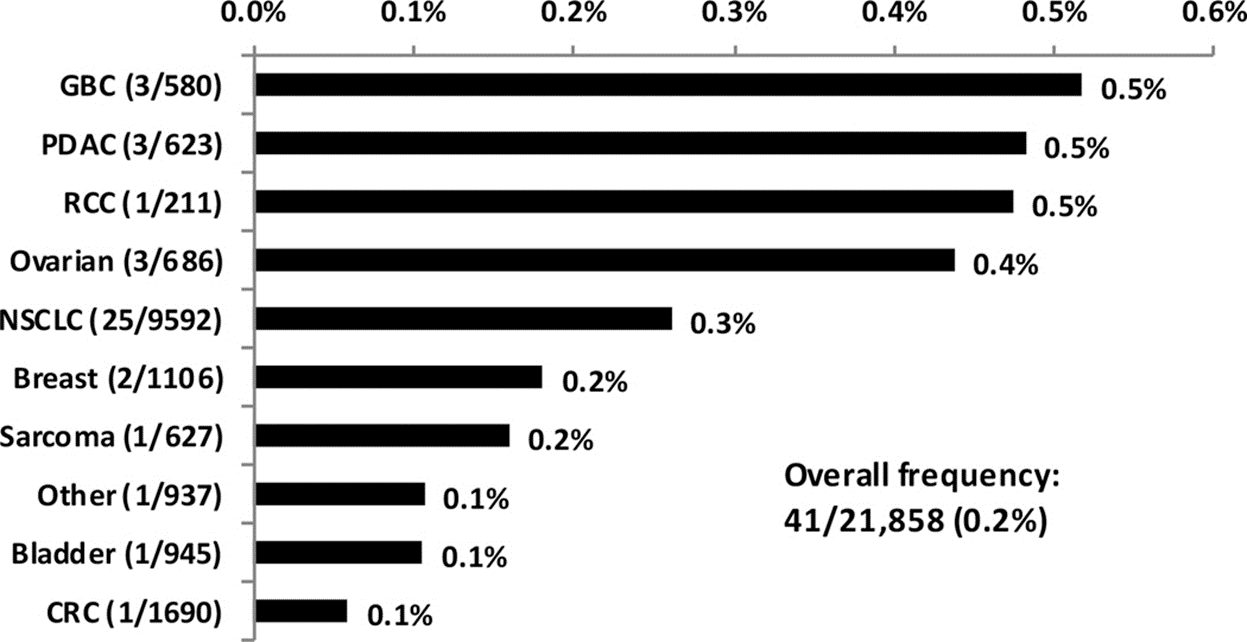
▲Figure 1. Incidence of NRG1 fusion variation in common solid tumors
2. Common Fusion Partners: Dominance of CD74 and SDC4
NRG1 fusions are formed through splicing of an upstream chaperone gene combined with NRG1. Clinically functional fusions preserve the EGF-like domain of NRG1, which constitutes a core driver of sustained tumor proliferation[1].
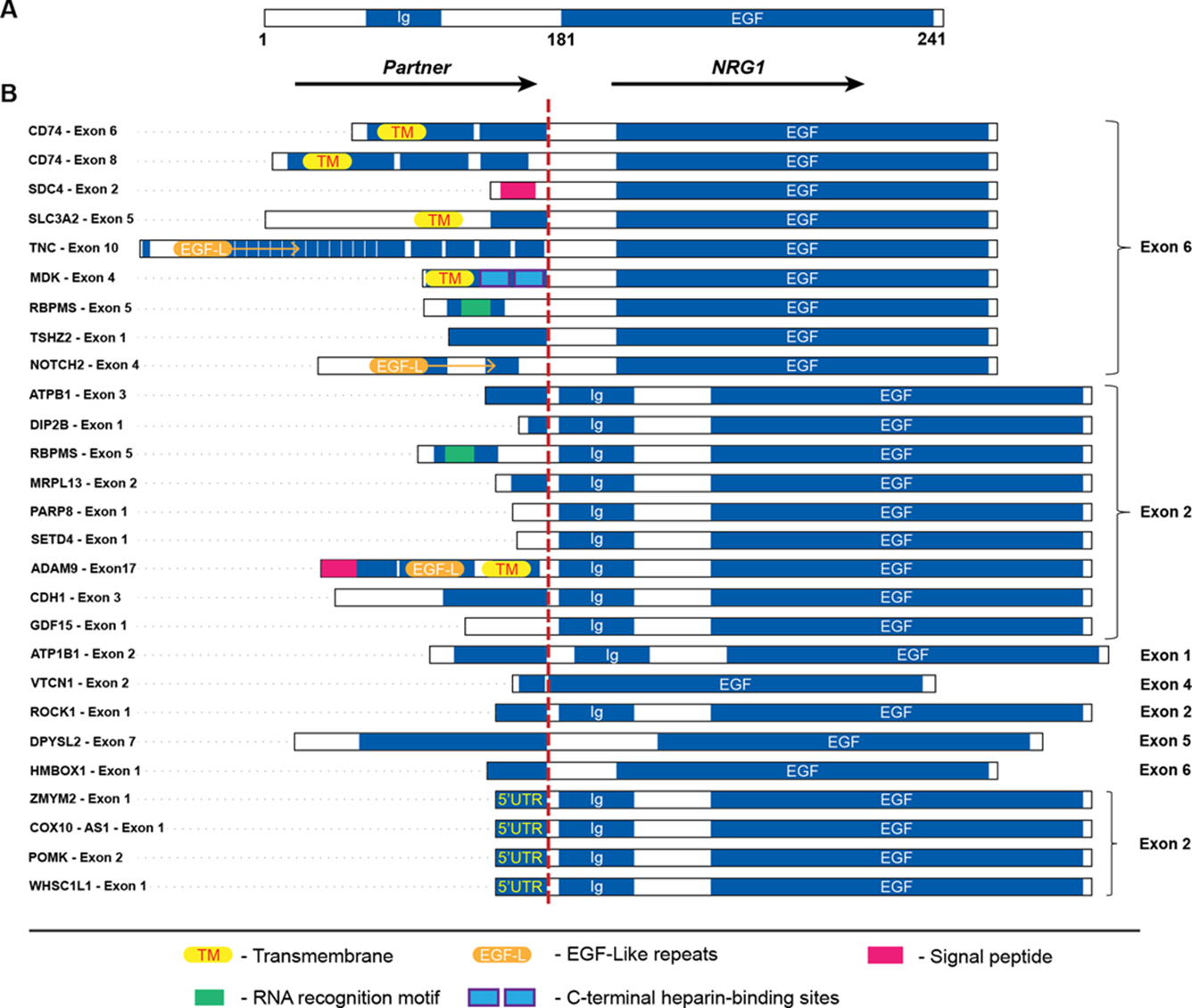
▲Figure 2. Schematic diagram of NRG1 fusion and distribution of fusion partners
Among lung cancer patients, CD74 (29.3%) and SDC4 are the most common fusion partners, followed by SLC3A2, CRISPLD2, NPTN, and other genes; CDH1 is the primary fusion partner in pancreatic cancer and bile duct cancer; POMK, VMP1, and other genes are uncommon fusion partners.
3. Detection challenges: DNA sequencing is associated with a high rate of false-negative results, while RNA sequencing can increase the detection rate of fusions.
NRG1 fusions are predominantly intergenic fusions, with breakpoints frequently located in intronic regions. Detection relying solely on conventional DNA-based next-generation sequencing (DNA-NGS) is susceptible to missed detection. Currently, the optimal detection strategy is combined detection via DNA+RNA-NGS. RNA sequencing can directly capture fused transcripts, which substantially improves detection sensitivity.
PART 2
NRG1 Fusion-Targeted Therapeutics: Approved Internationally, an Unmet Domestic Need
Currently, only one targeted therapeutic specifically indicated for NRG1 fusion has received regulatory approval globally. No corresponding therapeutics have been granted marketing approval by the National Medical Products Administration (NMPA) in China. Potential treatment approaches may be explored via clinical trial participation, cross-border drug access, or off-label use of existing approved therapeutics.
1. The Only Globally Approved Therapeutic: Zenocutuzumab (Bizengri)
This therapeutic obtained accelerated approval from the U.S. Food and Drug Administration (FDA) on December 4, 2024, marking the first targeted therapeutic specifically developed for NRG1 fusion-positive lung cancer. As of the current approval, its authorized indications cover three categories: advanced/metastatic NRG1 fusion-positive non-small cell lung cancer in patients who have received prior systemic treatment, and advanced/metastatic NRG1 fusion-positive pancreatic cancer in patients who have received prior systemic treatment. An indication for biliary tract cancer is scheduled to be added in May 2026.
Zenocutuzumab is a bispecific antibody that can simultaneously bind to human epidermal growth factor receptor 2 (HER2) and human epidermal growth factor receptor 3 (HER3), thereby blocking aberrant NRG1-driven HER2-HER3 signaling pathways at the origin. Its efficacy data are derived from the eNRGy Phase II clinical trial: for lung cancer patients, the objective response rate (ORR) is 33%, with a median duration of response (DoR) of 7.4 months; for pancreatic cancer patients, the ORR is 40%, and the median DoR ranges from 3.7 to 16.6 months; for biliary tract cancer patients, the ORR is 36.8%, and the median DoR ranges from 2.8 to 12.9 months[2,3].
2. Repurposing of existing medications: Afatinib
Real-world clinical activity of afatinib in the treatment of NRG1 fusion -positive cancers
Prior to the introduction of zenocutuzumab, the second-generation EGFR-TKI afatinib, a pan-HER inhibitor, was the most widely adopted clinical repurposing regimen for this indication. This medication inhibits abnormal tumor signaling by suppressing the PI3K/AKT pathway downstream of HER2-HER3[4].
In a reported case of advanced non-small cell lung cancer (NSCLC) with mixed histology and intracranial metastasis carrying the rare CRISPLD2-NRG1 fusion mutation, administration of afatinib led to a marked reduction in intracranial lesions observed on cranial magnetic resonance imaging after one month of treatment, and the patient achieved a favorable response to afatinib therapy[5].
The most favorable treatment outcomes reported to date include sustained disease control, with the duration of disease stability reaching up to 16 months in patients receiving afatinib combination therapy alongside topical treatment, and one patient maintaining a partial response (PR) for as long as 27 months[6].
3. Standard Staging-Based Management
Regardless of whether rare cancer-associated targets are detected, tumor staging consistently serves as the core foundational basis for lung cancer clinical management. In accordance with existing clinical guidelines and established conventional therapeutic regimens, NRG1 fusions do not alter the fundamental principles of standard staging-based tumor treatment.
PART 3
Rare targets do not equate to absence of therapeutic hope
NRG1 fusion is categorized as a "super rare target" in lung cancer research and treatment, and no dedicated targeted therapeutics have yet obtained regulatory approval for clinical use in China. For early-stage patients, surgical intervention is the primary approach to achieve radical clinical cure; for advanced-stage patients, prioritizing enrollment in clinical trials and pursuing access to specialized medications based on individual conditions is recommended. For patients who are ineligible for clinical trial participation, reference can be made to existing and emerging cases of off-label use of afatinib, or standard chemotherapy can be adopted as a backup treatment plan, so as to maximize survival outcomes through multi-level clinical management.
References
[1] Clin Cancer Res. 2019;25(16):4966-4972.
[2]https://www.fda.gov/drugs/resources-information-approved-drugs/fda-grants-accelerated-approval-zenocutuzumab-zbco-non-small-cell-lung-cancer-and-pancreatic
[3]https://www.fda.gov/drugs/resources-information-approved-drugs/fda-approves-zenocutuzumab-zbco-advanced-unresectable-or-metastatic-cholangiocarcinoma
[4] Ann Oncol. 2020;31(12):1693-1703.
[5] Zhongguo Fei Ai Za Zhi. 2024 May 20;27(5):399-404.
[6] Oncologist. 2021;26(1):7-16.
Disclaimer: This article is for general sharing purposes only. Should any issue concerning copyright or other related rights arise, please contact us promptly, and we will implement corrective measures without delay. We appreciate your cooperation.








 閩公網(wǎng)安備35021202000745